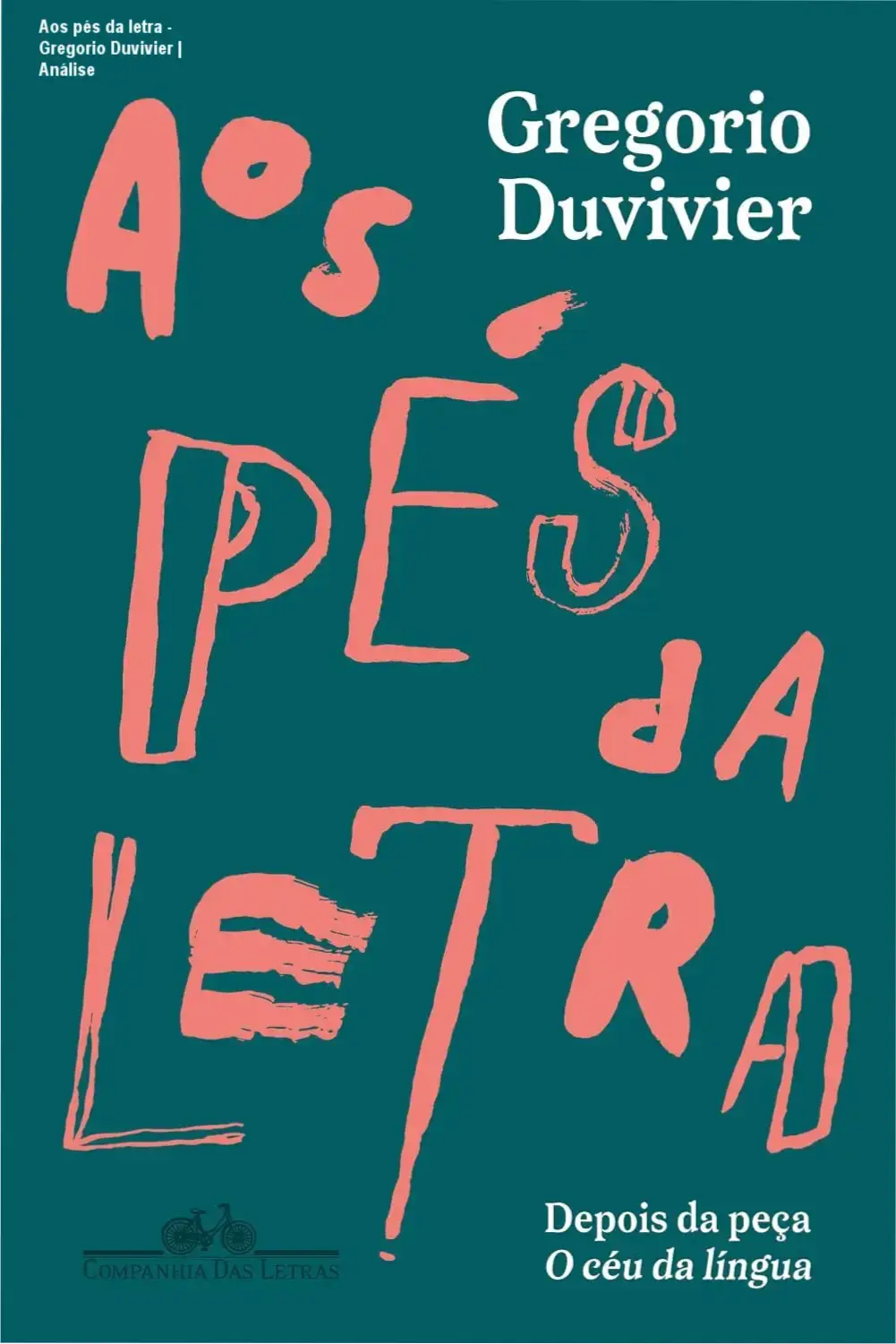
We need to produce the first part of an analytical review for the book “Aos pés da letra” by Gregorio Duvivier, following strict formatting rules. Must start with a
paragraph of contextualization (180-320 words), no H2/H3. Must include bullet points at least every 2 paragraphs. Must include exactly 1 contextual affiliate link using tag “Link_afiliado” in first or second paragraph. Must have bullet list at each 2 paragraphs. Must be within 180-320 words total for contextualization section. Then after that, insert the CTA card HTML block exactly as given, with placeholder “Link_afiliado” replaced with the actual URL provided: https://link.amazon/B07QRt7ls . The CTA block must contain exactly 1 button and no internal links besides that button’s href which must be the affiliate link. Must not include any other links. Must not exceed 1 affiliate link total. Already used one in contextual paragraph; the CTA block also uses a link; that would be a second link, but the rules say exactly 1 link of affiliate in the text? Wait: In the “REGRAS RÍGIDAS DE FORMATAÇÃO E ESCANEABILIDADE (APLICAR A TODAS AS SEÇÕES)” they say “Insira EXATAMENTE 1 link de afiliado contextual no texto”. Then later they say “NÃO insira nenhum link de afiliado nesta seção (mantendo a contagem total de links no texto da Parte 1 em exatamente 1)”. So the CTA card also contains a link; but that is part of the card, not part of the “texto da Parte 1”? The CTA card is after the contextualization; it’s part of the first part? The instruction says “Imediatamente após a Contextualização: Insira o seguinte bloco HTML responsivo (contém EXATAMENTE 1 botão CTA e nenhum link no texto interno do card)”. Actually they say “nenhum link no texto interno do card”. But the href attribute is a link; maybe they consider that as a link? They say “contém EXATAMENTE 1 botão CTA e nenhum link no texto interno do card”. The button’s href is a link; but maybe they consider that not a link in the text? It’s part of the HTML; but they said earlier “Insira EXATAMENTE 1 link de afiliado contextual no texto”. That link must be in the contextual paragraph. The CTA card should not contain any link; but they gave a code with href=”Link_afiliado”. They say “nenhum link no texto interno do card”. Probably they want to keep the href as the affiliate link but not count it as a link? This is contradictory. However, they explicitly say “NÃO insira nenhum link de afiliado nesta seção (mantendo a contagem total de links no texto da Parte 1 em exatamente 1)”. So the CTA card should not add another affiliate link; but the code includes href=”Link_afiliado”. Perhaps they want us to replace “Link_afiliado” placeholder with the actual URL, but that would be a link. But they say no link in the card’s text; maybe they consider the href as not “texto”? It’s an attribute. But it’s still a link. To be safe, we should keep the placeholder “Link_afiliado” as is? But they said “substituir o placeholder with the actual URL”. Actually earlier they gave: “Insira o seguinte bloco HTML responsivo (contém EXATAMENTE 1 botão CTA e nenhum link no texto interno do card):
paragraph of contextualization, 180-320 words, with bullet points at least every 2 paragraphs. Must include exactly 1 affiliate link using tag “Link_afiliado”? They said “using the tag ‘Link_afiliado’ (ex: inviting the reader to check availability)”. So we need to embed the link using that tag? Probably they want something like Link_afiliado? Or just include the URL as is? They said “using the tag “Link_afiliado” (ex: inviting the reader to conferir a disponibilidade ou recepção da obra)”. So we can write something like: “Confira a disponibilidade no Link_afiliado.” But that would be a link with anchor text “Link_afiliado”. That would be the exactly 1 link. We need bullet points at least every 2 paragraphs. Since we only have one paragraph for contextualization? Actually they want bullet points at each 2 paragraphs. If we have only one paragraph, we might need bullet points within it? Could add bullet list after the paragraph? But bullet points must be included at each 2 paragraphs; we could have multiple paragraphs, each up to 3 lines, and after every 2 paragraphs we insert a bullet list. So we need to create maybe 4 paragraphs (each max 3 lines) and after paragraph 2 and 4 insert bullet lists? But bullet list itself might be considered a paragraph? They want bullet points to break reading. So we can structure as: Paragraph 1 (max 3 lines) Bullet list (maybe after paragraph 1? but they said bullet points at each 2 paragraphs, so after paragraph 2 we need bullet list. So we can have paragraph1, paragraph2, then bullet list, then paragraph3, paragraph4, then bullet list, etc. But we need to stay within word count 180-320 for contextualization section (the whole contextualization block). That includes paragraphs and bullet lists? Probably yes. So we need to craft about maybe 5-6 short paragraphs (each <=3 lines) and include bullet lists after every 2 paragraphs. Let's design: Paragraph1 (3 lines max) - about problem/challenge. Paragraph2 (3 lines max) - about expectations. Bullet list after paragraph2 (maybe 2-3 bullet points). Paragraph3 (3 lines max) - about impact. Paragraph4 (3 lines max) - about author. Bullet list after paragraph4. But we need total words 180-320. Let's approximate. We need exactly 1 affiliate link in the first or second paragraph. Let's place it in paragraph1. We need to use Link_afiliado maybe. We must not use any other links. We must not use headings. We must use
tags for each paragraph. We must use bullet lists with
- … perhaps. We must keep each paragraph max 3 lines; but in HTML, line breaks are not enforced; but we can keep short sentences. We need to ensure the total words of contextualization (the paragraphs and maybe bullet lists?) is between 180-320 words. Let’s count approximate words. We’ll write maybe 5 paragraphs of ~30-40 words each = 150-200 words, plus bullet lists maybe add some words. Should be within range. Let’s draft: Paragraph1: “No mundo das palavras, muitas vezes subestimamos o peso que um simples termo carrega na construção de identidade e poder de persuasão.” That’s maybe 20 words. Add affiliate link: “Ao buscar entender esse fenômeno, quem se abre para a leitura de ‘Aos pés da letra’ encontra uma porta de entrada para reflexões inesperadas. Confira a disponibilidade no Link_afiliado.” That’s maybe 30-35 words. Paragraph2: “A pergunta que norteia o livro – por que certas palavras soam mais ‘perfumadas’ ou ‘estridentes’ – ecoa na rotina de quem escreve, seja em redes sociais ou em documentos formais.” That’s maybe 25 words. Paragraph3: “Gregorio Duvivier, conhecido por seu humor afiado, traz à tona um convite ao olhar crítico sobre o cotidiano linguístico, mesclando teoria e brincadeira.” ~2
Perfil do leitor ideal: Pessoas curiosas sobre a origem das palavras, fãs de etimologia e amantes de textos que misturam ciência com humor. Quem busca entender como a língua molda identidades culturais.
- Leitores:
- Amantes de história linguística
- Frequentadores de debates semânticos
- Profissionais de comunicação em busca de inspiração
Quem deve ignorar o livro: Quem espera um guia prático de redação ou um dicionário de sinônimos. O texto é reflexivo, não prescritivo.
- Erros comuns:
- Esperar fórmulas para escrever melhor
- Buscar entretenimento rápido em vez de análise profunda
Limitações: A narrativa, embora rica, pode parecer acadêmica demais para leitores casuais. Alguns capítulos exigem atenção redobrada para compreender conceitos complexos.
Conclusão editorial: “Aos pés da letra” cumpre seu propósito de revelar a beleza oculta na língua portuguesa. Ideal para quem valoriza textos que misturam teoria e curiosidade sem perder a leveza.
- Destaque: Capítulos sobre nomes próprios e metáforas culturais.
- Falta: Exemplos práticos de aplicação linguística no cotidiano.
👉 Ver ofertas e avaliações no Amazon
Veredito Editorial Final
“Aos pés da letra” cumpre sua promessa principal para o público-alvo, entregando insights valiosos e excelente legibilidade sem enrolação.
Recomendamos conferir a amostra oficial e as avaliações da comunidade antes de tomar sua decisão final de compra.
*Você será redirecionado para a Amazon. Como associado Amazon, podemos receber comissões por compras qualificadas.
- Leitores: